Fabric & Textiles
Dressing the Lanai: Choosing Performance Fabrics for Hawaii's Indoor-Outdoor Life
If you've lived in Portlock for any length of time, you know the particular way salt air moves through a house in the morning. Windows open, trade winds running, and within a season the wrong fabric starts to tell on itself — a faint smell, a color that's lost its depth, a cushion that won't fully dry. I've watched it happen in beautiful homes. It doesn't have to.
The indoor-outdoor life is what makes Hawaii extraordinary. But it asks something of every fabric in the house. The question worth asking before you fall in love with a textile is a simple one: what will this look like in two years?
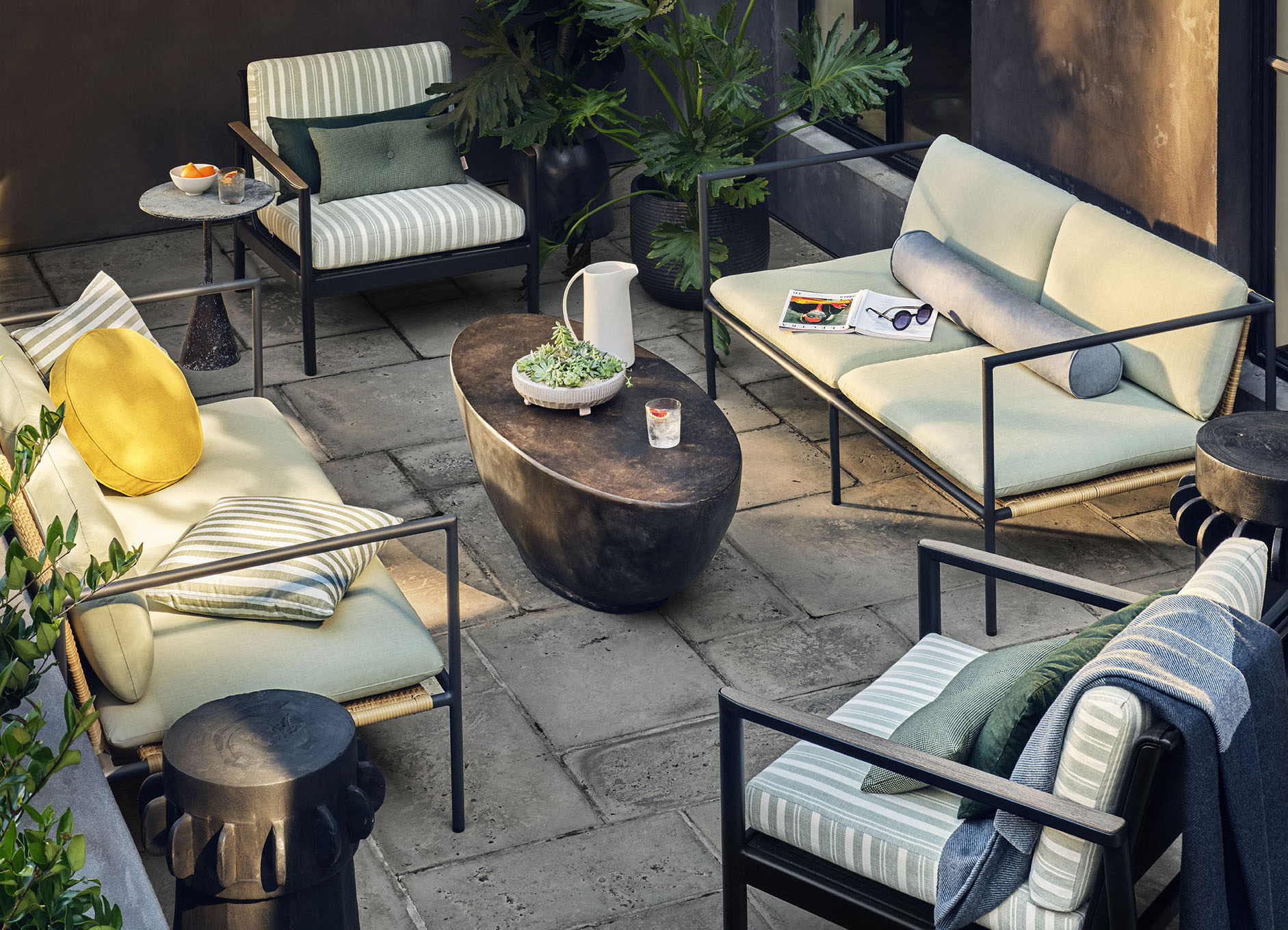
The Climate Is Not Your Enemy
Hawaii's climate is genuinely demanding for textiles. But I'd reframe it this way: it rewards good decisions. The same conditions that destroy a poorly chosen fabric will bring out the best in one that belongs here.
The challenge is threefold. First, UV. The Hawaiian sun is not the mainland sun — the angle, the intensity, the duration are all different, and they are hard on surface-dyed color. Second, humidity. Even on Oahu's sunny south shore, ambient humidity sits around 65 percent. In Nu'uanu or Manoa, where the trade winds bring the rain in sideways on certain afternoons, it climbs considerably higher. Third, salt air — pervasive along the coast from Kailua to Ko Olina to Hāwī on the Big Island — accelerates every form of material degradation.
None of this is a reason to choose the wrong fabric and hope for the best. It's a reason to choose deliberately.
What Performance Actually Means
The term "performance fabric" gets used loosely, but in a Hawaiian context it has specific requirements.
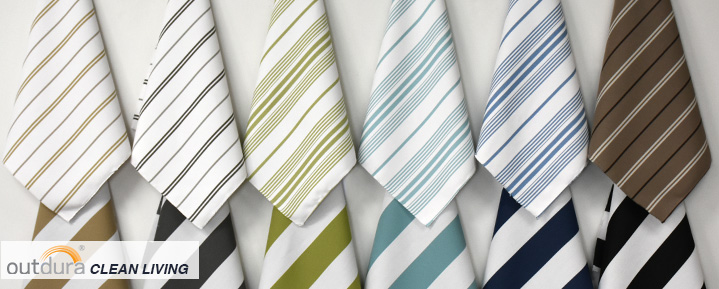
UV resistance is the non-negotiable starting point. Solution-dyed acrylic — the pigment locked into the fiber during manufacturing rather than applied to the surface — is the benchmark. The color is structural, not cosmetic. You won't get the same softness as a surface-dyed linen, but you'll have color that holds through years of Hawaiian sun. Even the best solution-dyed fabrics have a lifespan under direct exposure — expect seven to ten good years, then plan for replacement.
Antimicrobial treatment matters everywhere in Hawaii, and it's essential in any space that gets real airflow from outside. Fabrics treated with silver-ion or comparable antimicrobial finishes resist the mildew growth that would otherwise take hold quietly and ruin a cushion before you notice. In a Kailua home with the windows open most of the year, this isn't an upgrade — it's baseline.
Quick-dry construction is the detail that separates comfortable outdoor living from constant maintenance. Open-weave and loosely twisted yarn constructions let moisture move through the fabric rather than pool inside it. A cushion that dries in two hours after an afternoon shower is a different experience than one that stays damp until Tuesday.
The Case for Natural Fibers Indoors
Performance fabrics solve problems, but they don't create the beauty that natural fibers do. For protected interior spaces — the living room shaded from direct sun, the bedroom with the air conditioning running — linen and hemp remain the right choice.
Belgian linen in particular has a quality no synthetic can replicate: it gets better with use. The slight slub in the weave, the way it softens and gains depth over time, the natural variation in tone — these are things that improve with the years, not despite them. In a Kahala home where the light is steady and generous, heavyweight linen in warm Kahala-afternoon cream does something a performance fabric simply cannot.
Hemp is worth more attention than it typically receives. Its natural resistance to mold and UV isn't a treatment that wears off — it's a property of the fiber itself. For window treatments and light upholstery in rooms with some airflow, hemp offers a combination of beauty and resilience well suited to Hawaii.
Color in the Island Context
The sophisticated Hawaiian palette draws from geology and ocean rather than the flora-and-fauna vocabulary of commercial island décor. A few directions that work consistently:
Volcanic neutral: The warm charcoal of cooled pāhoehoe, the bone white of bleached coral, the particular gray-brown of Kona lava fields. These tones anchor a room without competing with the landscape outside.
Portlock morning light: The gray-blue quality of coastal light off the water before 9am — a tone that sits somewhere between slate and sea glass and reads beautifully in upholstery on a covered lanai.
Waimea dirt: The deep terracotta of the Big Island's red soil — used as an accent tone, not a ground, it brings warmth to any palette without tipping into orange.
Manoa canopy: The deep, slightly grayed green of the windward forest — not tropical-bright, but the green of things growing in filtered light. In performance fabric, this tone is rare and worth finding when you can.
Practical Care
Good fabric care in Hawaii is a seasonal practice, not an emergency response.
Wash outdoor cushion covers at the start of each season with mild soap and a soft brush — you're removing salt accumulation and early mildew before it becomes established. Air-dry completely; even quick-dry fabrics need circulation to release moisture from the fill. During Kona weather — the southerly wind and rain pattern that catches the leeward side off guard — bring cushions inside. Store them in a dry space with good airflow, not a sealed container.
The right fabric, cared for with attention, will age into something the mainland equivalent never quite achieves. The salt air, the UV, the humidity — they impart a patina that is genuinely beautiful. The goal isn't to fight that process. It's to choose materials that undergo it with dignity.
Stay in the Loop
New arrivals, seasonal
stories & studio notes.
Join the Hale circle. Be the first to know about new fabric arrivals, limited accessory drops, and studio events.
No spam. Unsubscribe at any time.